Dying to Run, Episode 1: “Thirty-One Symptoms”
Matt Fitzgerald has been a runner for almost his entire life, but his running days ended abruptly in 2020 when he developed long COVID, a post-viral chronic illness that makes it almost impossible to exercise. “Dying to Run” chronicles Matt’s quest for closure in the form of one last finish line.
* * *
My right butt cheek begins to buzz, startling me. These days it doesn’t take much to make me jump. Among the more than thirty symptoms of post-acute COVID-19 syndrome (aka long COVID) I’ve experienced over the past 1,182 days (but who’s counting?) is hyperekplexia—a hair-trigger startle reflex.
I pull my phone out of my pocket and kill the alarm, which I’d set for 11:55 PM. Seeing the time, I realize that, amid the chaos of hosting a New Year’s Eve party, I’ve forgotten to take my sleep medication, insomnia being another symptom of long COVID. Most of our guests have left, leaving only Lauren, my assistant coach at Dream Run Camp; Ruby, who handles our social media; Zacchaeus, a subelite runner visiting from Michigan; and Nataki, my wife, to join me in toasting the arrival of 2024. The moment that’s out of the way I announce that I must excuse myself to take care of a time-sensitive matter. Too late, I realize that by being suspiciously nonspecific I have achieved the opposite of the effect I’d intended, which was to draw minimal attention to myself. Behind eyes narrowed in curiosity I picture mind cogs spinning, wondering, perhaps, if I have a special New Year’s gift for everyone. But no, the gift is for me, and it’s not exactly a gift.
With Nataki trailing behind me (she alone knows what I’m up to), I make my way downstairs to the casita, resisting an impulse to jam a finger in my nose, which has again clogged with crusty boogers (you haven’t experienced dryness until you’ve experienced winter at seven thousand feet), but I resist, remembering what happened last time. I can’t be certain that spontaneous nosebleeds are a symptom of long covid, but I do know I never got them before.
Inside the casita I head straight to my desk as Nataki draws a bath. Thinking ahead, I left my web browser open to the Aravaipa Running website. Registration for the Javelina Jundred ultramarathon has been open for five minutes and I’m not taking any chances, knowing the event sells out quickly. Panic strikes when I hit the registration link and the page takes forever to load, my mind’s eye seeing thousands of other runners bent over their screens, blocking my entry. But on the second try I get through, and moments later I’m staring at a confirmation email, wondering what the hell I’ve just done.
The most nefarious symptoms of long COVID, if you ask me, are exercise intolerance and post-exertional malaise. Physical exertion is literally toxic for me, as it is for most long COVID sufferers. When I climb a flight of stairs or lift something heavy, I feel as though I’m breathing through a straw. That’s exercise intolerance, and it has turned working out—once my favorite hobby—into an unpleasant chore. Far worse, though, is post-exertional malaise, a species of misery that far exceeds what is hinted at by the condition’s anodyne name. COVID long-haulers have taken to coining their own, more apposite names for particular symptoms, such as “brain in fire” for what doctors call neuroinflammation and what a well-meaning but clueless media calls “brain fog”. My own name for post-exertional malaise is “chemotherapy feeling.”
Can you name the worst day of your life? For me it’s May 24, 2021. That’s the day an ill-advised attempt to ease back into a bit of light jogging landed me in bed, not blandly uncomfortable as the word “malaise” connotes but suffering in the violently paroxysmal manner of heroin withdrawal. I spent the entire day clenched in a fetal curl, hyperventilating, my soul a smoking streak of shrieking feathers bouncing off indifferent windows in the burning building of my body. I spoke four words only the entire day, to Nataki: “I want to die.”
You’d think the experience would have cured me of any and all notions of running again, but it’s not so easy for me, and on New Year’s Day 2023—exactly one year ago—encouraged by a general abeyance of my symptoms, I repeated the experiment, more cautiously this time, beginning with a handful of thirty-second jogs separated by longer bouts of walking. I then waited forty-hours to see if I died, and if I didn’t I completed another walk-run with slightly longer jogs, and so on. This process lasted until mid-February, when a thirty-minute jog with no walk breaks devolved into a death march and I pulled the plug, having dug myself into a hole of malaise that took me months to climb out of.
I haven’t run since, seeing no evidence that the result would be any different. The Javelina Jundred offers a choice of race distances: one hundred miles and one hundred kilometers (sixty-two miles). I choose the latter, smiling at my reasonableness. Doctors say that when a person with long COVID runs a mile, their body thinks they’ve run a marathon. If this is accurate (and it feels accurate), then a person with long COVID running one hundred kilometers is equivalent to a healthy person running 2,620 kilometers.
The race takes place on October 27, giving me about ten months to prepare. Except I can’t actually prepare, because the only way to prepare to run one hundred kilometers is to exercise, and as I believe I’ve mentioned, my body can’t tolerate exercise. Not much, anyway. Which makes my decision to register for the event reckless at best, and probably dangerous. Yet I want to do it.
That’s not true. I need to do it.
About the author
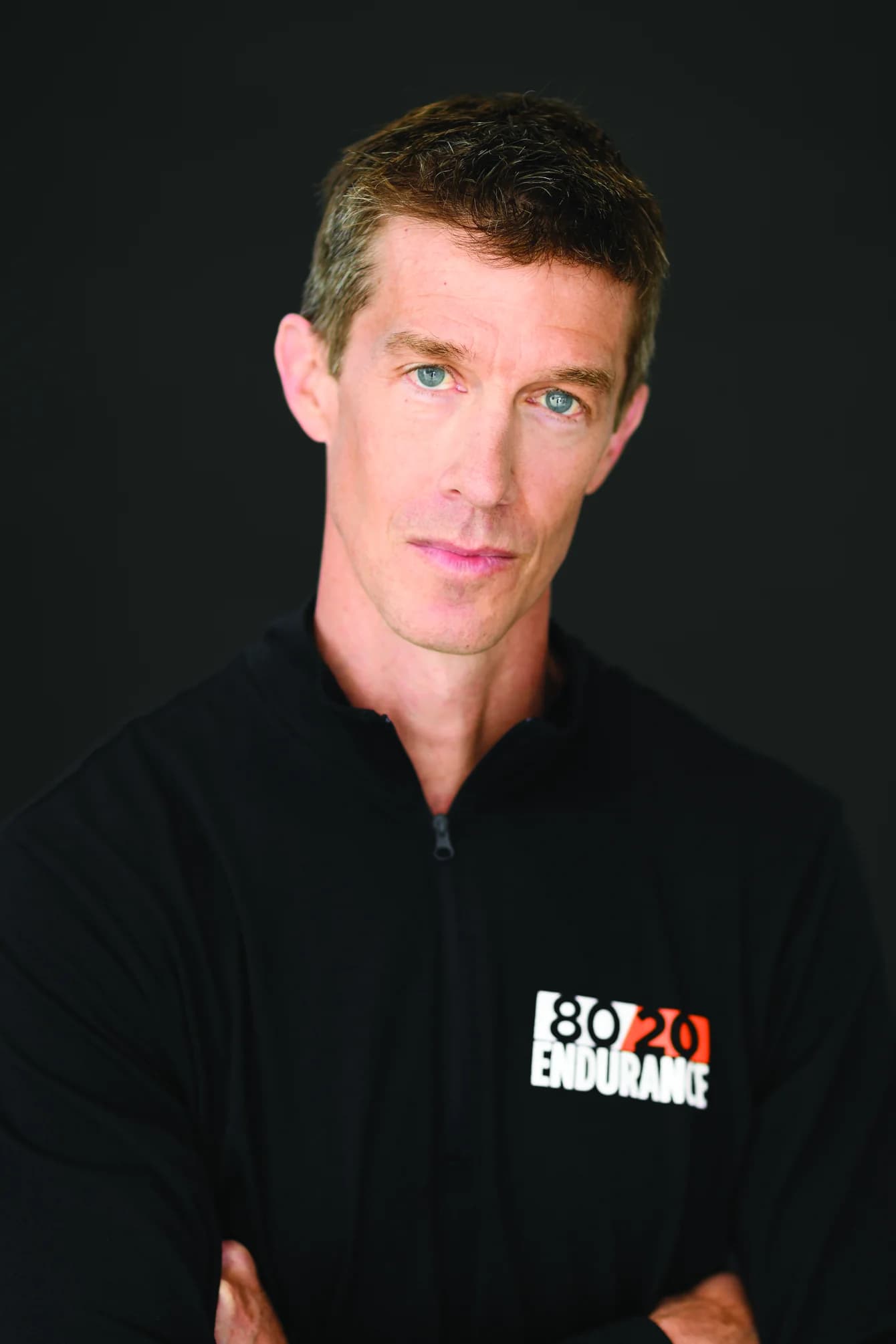
Matt Fitzgerald
Co-founder, 80/20 Endurance
Matt Fitzgerald is an endurance sports coach, nutritionist and the author of 80/20 Running, 80/20 Triathlon, The Endurance Diet and How Bad Do You Want It? His training plans have helped thousands of athletes of every level reach their goals.
More about Matt