The Difference(s) Between 80/20 Training and the Maffetone Method
The short version. The Maffetone Method and 80/20 both tell you to slow most of your training down, and both beat the moderate-intensity rut most athletes live in. Maffetone gives everyone the same heart rate ceiling, 180 minus your age, and rules out faster work until the last weeks before a race. 80/20 sets zones from your own threshold and keeps about 20 percent of training at moderate to high intensity all year, because that is what elite athletes across every endurance sport actually do. The differences, and why they matter, are below.
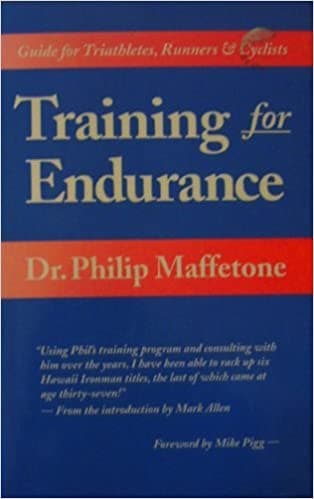
Phil Maffetone is nothing if not consistent. In 1995, I copyedited his book Training for Endurance, a pro bono task I was given by my boss at Multisport magazine, the late Bill Katovsky, who was a close friend of Phil’s. At that time, I was just beginning to ease back into running after a seven-year layoff, and the book inspired me to give heart rate training a try for the first time. The other thing I remember about the experience is Phil getting miffed at me because I misspelled his full first name on the cover page, inserting an extra “L” in Philip!
Anyway, my point is that Phil was then teaching the same phillosophy—sorry, philosophy—of endurance training he is today. Same maximal aerobic function (MAF) concept, same 180 – age formula, same emphasis on avoiding overstressing the body. What has changed is the context in which Phil teaches his method. I’m thinking of one change in particular, which is the popularization of the 80/20 endurance training method that is practiced by most elite endurance athletes and that I myself promote through this website and the books: 80/20 Running and 80/20 Triathlon.
The vast majority of nonelite endurance athletes spend way too much time training at moderate intensity. Both the Maffetone and 80/20 methods take direct aim at this error, requiring athletes who adopt them to slow down to one degree or another. An unfortunate consequence of this overlap is that the two methods have been lumped together in the public consciousness, regarded as all but interchangeable. I’ve even encountered athletes who mix and match the two, for example by using Phil’s zones with an 80/20 plan.
In fact, though, there are important differences between the Maffetone and 80/20 methods, beginning with their origins.
Where the Maffetone Method comes from
The Maffetone Method, as its very name indicates, is the invention of one man. It did not exist, and was not practiced, anywhere on earth until Phil created it and began to teach it to athletes. Like many popular diets, this method was arrived at via a process of nonempirical inference grounded in mechanistic physiological reductionism. With diets, this process typically goes something like this: “Because carbohydrates have biochemical effect A on the body, and fats have biochemical effect B, and proteins have biochemical effect C, the optimal human diet must therefore comprise X percent carbohydrate, Y percent fat, and Z percent protein.” When applied to endurance training, the same approach looks more like this: “Because low-intensity exercise has biochemical effect A on the human body, and moderate-intensity exercise has biochemical effect B, and high-intensity exercise has biochemical effect C, the optimal endurance training program must therefore comprise X percent low intensity, Y percent moderate intensity, and Z percent high intensity.”
This is essentially the type of argument Phil Maffetone uses to persuade athletes that they should completely avoid what he calls anaerobic training until they have fully conditioned their aerobic system through low-intensity training and are almost ready to race. In an article appearing on his website, Phil cites three specific physiological mechanisms that support this argument:
- Anaerobic activity can lower the number of aerobic muscle fibers, sometimes significantly.
- Lactic acid, produced during anaerobic work, may inhibit aerobic muscle enzymes necessary for aerobic function.
- Anaerobic training increases the respiratory quotient (a measure of fat- and sugar-burning) indicating the body is burning less fat.
What is lacking from this argument is any concrete evidence that training exclusively at low intensity for a long period of time before adding in a bit of work at higher intensities for a few weeks yields better competitive results than other training methods. It’s a classic example of a biological plausibility story standing in the place of complete science. This doesn’t mean the Maffetone Method isn’t effective; there’s plenty of anecdotal evidence that athletes who transition to it from the moderate-intensity rut yields good results. Personally, though, I need more than an intriguing hypothesis and a bunch of testimonials to entrust my own fitness to a training system, diet, or other method that promises to make me better.
Where the 80/20 method comes from
The funny thing is, if you want to know which method of balancing of low, moderate, and high intensities is optimal for building endurance fitness, you don’t really need a physiologically grounded hypothesis. Heck, you don’t even need to know that lactic acid exists! All you have to do is look at what actually happens when athletes train with various intensity distributions.
Which brings us to the origin of the 80/20 method. Unlike the Maffetone Method, 80/20 wasn’t invented by anyone. Instead it evolved through a decades-long process of collective trial and error, in which elite endurance athletes tried different methods and retained those that proved more effective while discarding those that proved less effective. By the time exercise physiologist Stephen Seiler observed in the early 2000s that elite endurance athletes across disciplines and geographical boundaries adhered to an 80/20 intensity balance, these athletes had already been doing so for quite a while, and without having the foggiest idea why it worked. In fact, although controlled experiments have since demonstrated that an 80/20 intensity balance is optimal as well for mere mortals like you and me, we still lack a complete physiological explanation for its effectiveness. And that’s fine by me. I’d much rather know what works, but not why, than know why something might work but not whether it actually does.
Ironically, the original version of the 80/20 method, loosely speaking, was the training system developed by Arthur Lydiard in the 1950s. Like the Maffetone Method, Lydiard’s system entailed training exclusively at low intensity for an extended period of time before transitioning to phases featuring workouts at higher intensities. A big improvement on the interval-focused programs that had dominated the sport previously, it revolutionized endurance training, lifting elite performance standards to a whole new level. Over time, however, other coaches found ways to improve the method, most especially by allowing athletes to perform modest amounts of moderate- and high-intensity exercise throughout the entire training cycle—in other words, by further evolving the Lydiard/Maffetone approach into the 80/20 approach—and in so doing lifted elite performance standards higher still.
Maffetone vs 80/20 at a glance
The bottom line is that the Maffetone and 80/20 methods are similar but not the same. The table below summarizes the key differences.
| Maffetone | 80/20 | |
| Is there a place for moderate- and high-intensity training? | Only in the last few weeks before competition. | Yes! Up to 20% of training is done at these intensities throughout the training cycle |
| How is low intensity defined? | Through a one-size-fits-all heart rate formula of 180 – age | Through validated field or lab tests aimed at pinpointing an individual athlete’s current ventilatory threshold |
| How is training intensity monitored? | Heart rate | Take your pick: Heart rate, pace, power, perceived effort |
If you want to try the 80/20 side of the table, set your zones with the 80/20 Zone Calculator and pick an 80/20 training plan for your race.
Frequently asked questions
What is the Maffetone Method?
Phil Maffetone’s system for building what he calls maximal aerobic function. You train at or below a single heart rate, 180 minus your age with small adjustments, for months, avoid anything harder, and add faster work only in the final weeks before competition.
What is the MAF 180 formula?
Subtract your age from 180, then adjust by 5 or 10 beats for illness, injury, inconsistent training or long consistent training. The result is your training ceiling. It is the same number for every healthy athlete of the same age, which is the method’s main weakness.
Is the Maffetone Method the same as 80/20 or Zone 2 training?
No. All three put most training at low intensity, but 80/20 keeps up to 20 percent of training moderate to hard through the whole cycle and sets the low-intensity ceiling from your own threshold test, not from a formula.
Can I use my MAF heart rate with an 80/20 plan?
Do not mix them. An 80/20 plan’s zones assume a threshold-based ceiling. For many athletes 180 minus age lands below Zone 2, so the easy days get slower than the plan intends and the hard days are missing. Use the calculator and a field test instead.
Does the Maffetone Method work?
Athletes who come to it from the moderate-intensity rut usually improve, because slowing down works. What is missing is evidence that months of low intensity only beats the 80/20 balance that elites and controlled studies converge on.
Which should I choose?
If you want a method with a track record across every endurance sport and a way to set zones that fits you, 80/20. Start with Seiler’s hierarchy of endurance training needs, then the training intensity articles. Team 80/20 includes every plan.
80/20 Endurance training plans
Training for a race?
Our 5K, 10K, half marathon and marathon plans keep most of your running easy, so the hard sessions count. Four levels for each distance, from your first race to a serious time goal, with coach email support and a free switch to another level.
About the author
Matt Fitzgerald
Co-founder, 80/20 Endurance
Matt Fitzgerald is an endurance sports coach, nutritionist and the author of 80/20 Running, 80/20 Triathlon, The Endurance Diet and How Bad Do You Want It? His training plans have helped thousands of athletes of every level reach their goals.
More about Matt