Skip to content
80/20 Endurance

Articles

Search articles

Loading…

Training science, coaching, and the 80/20 method — from Matt Fitzgerald and the 80/20 Endurance coaching team.

  • Researchers Uncover New Reasons Not to Overdo HIIT

    There’s a good chance you came across the following headline, or another one like it, a couple of weeks back: “Too Much High-Intensity Exercise May Be Bad for Your Health.” These click-baiting newsflashes referred to a new study out of Sweden’s famed Karolinska Institute that looked at the molecular and metabolic effects of a HIIT…

    Matt Fitzgerald ·
  • The Difference(s) Between 80/20 Training and the Maffetone Method

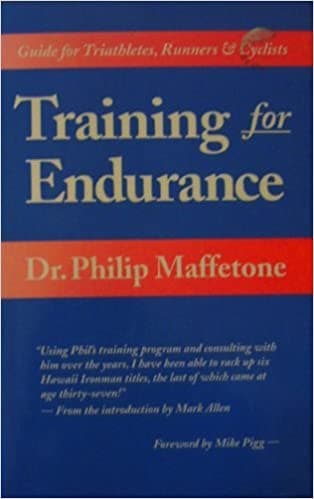
    The short version. The Maffetone Method and 80/20 both tell you to slow most of your training down, and both beat the moderate-intensity rut most athletes live in. Maffetone gives everyone the same heart rate ceiling, 180 minus your age, and rules out faster work until the last weeks before a race. 80/20 sets zones…

    Matt Fitzgerald ·

  • Want to Train More? Better Eat More!

    The body is smart. When you increase your habitual activity level, your body consumes more energy and therefore requires more energy input from food to meet its elevated needs. No problem. Our bodies are outfitted with internal sensors capable of detecting such caloric deficits and ratcheting up appetite in response. Same thing when your habitual…

    Matt Fitzgerald ·

  • How to Train “80/20” without Really Trying

    Every once in a while an athlete asks me if the training plans offered in one of my older books such as Braining Training for Runners or Triathlete Magazine’s Essential Week-by-Week Training Guide are still relevant or have been rendered obsolete by the 80/20 training plans I peddle today. My stock answer to this question…

    Matt Fitzgerald ·

  • The Trouble with Mental Toughness

    At the February 1982 Ironman World Championship, Julie Moss had a comfortable lead with less than 2 miles remaining. Then her body began to shut down. Staggering and crawling, she dragged herself across the finish line, and into endurance sports lore. The broadcast of Moss’ determination on ABC’s Wide World of Sports has motivated thousands…

    David Warden ·

  • That Coach Is Best Who Coaches Least

    In his classic political manifesto Civil Disobedience, Henry David Thoreau writes, “That government is best which governs least.” It’s an interesting idea. Thoreau does here not deny that government serves a necessary function, but he does contend that it performs this function best when it does the bare minimum for the citizens it serves and…

    Matt Fitzgerald ·

  • Improve Your Mental Game with the One-Month “No Hope” Challenge!

    I once coached a runner, let’s call him Kevin, who used the word “easy” more often than any athlete other I’ve ever worked with. It was like some kind of verbal tic. He deployed the adjective at least once in almost every post-run comment he left on his online training calendar. Granted, “easy” has some…

    Matt Fitzgerald ·

  • Laughing All the Way to the Finish Line

    Dear Dr. Young, The good news is I have heart disease . . . These are the actual first words of an email message I sent to my primary care physician a couple of weeks ago. I had just undergone an angiogram to determine the source of an abnormality seen in my EKG reading during…

    Matt Fitzgerald ·

  • A Lot of Triathletes Train Too Much During Ironman Prep

    The short version. Most amateur Ironman athletes train more than they need to. In a study of 99 Ironman finishers, those training under 14 hours a week, 14 to 20 hours, and over 20 hours finished within nine minutes of each other on average, around 11 and a half hours. Experience predicted finish time better…

    Matt Fitzgerald ·

  • Will Respiratory Muscle Training Finally Catch On?

    In last week’s post I discussed the idea that innovation in endurance training methods obeys the Law of Good Enough, as I call it. This simply means that elite coaches and athletes identify and adopt better training methods at a pace that is no faster than is necessary to succeed again existing performance standards. An…

    Matt Fitzgerald ·