What I Tell My Athletes, I’m Still Learning to Tell Myself
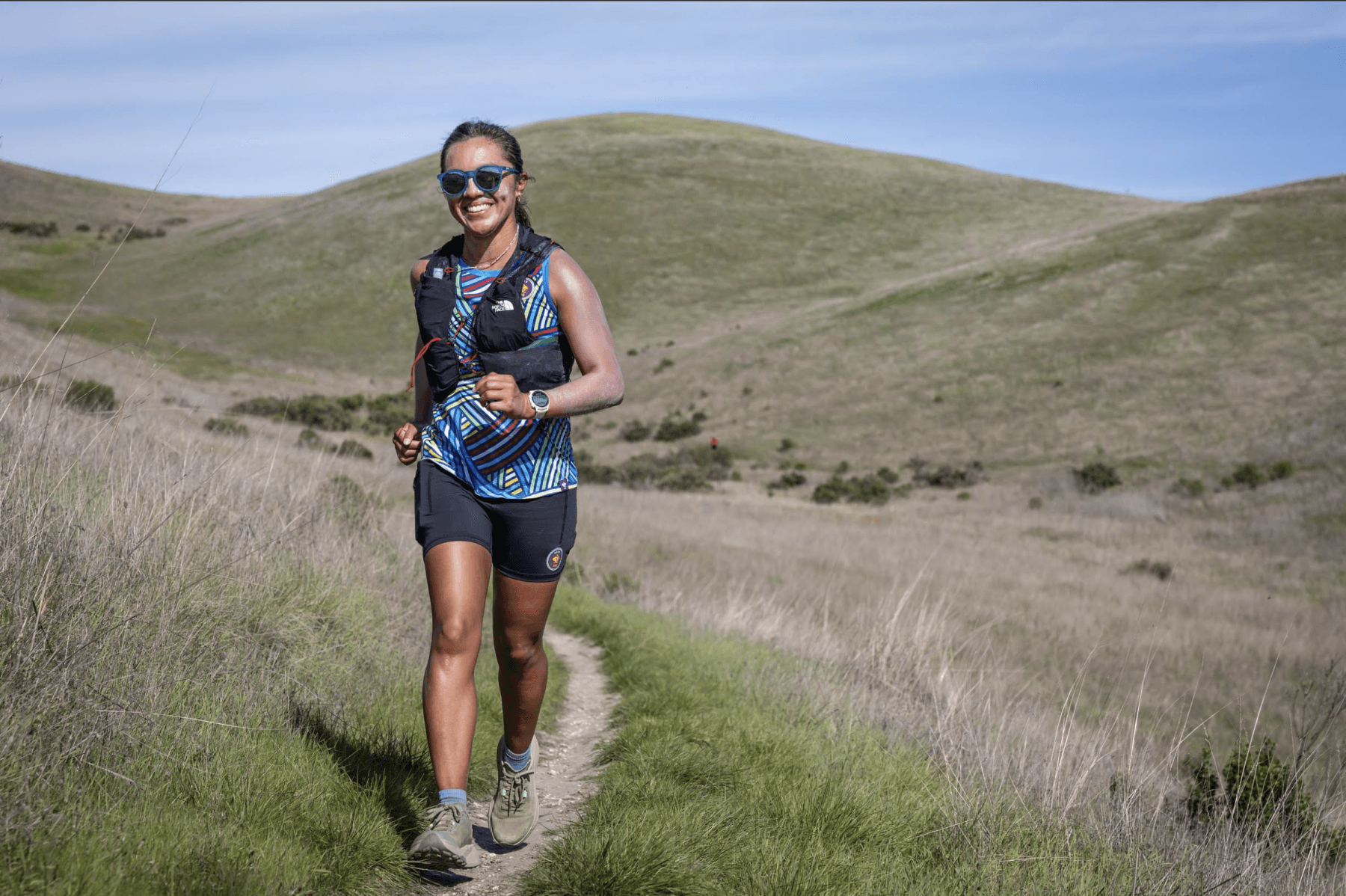
Coaches of Color apprentice Rosina Garcia reflects on the challenges of coaching oneself.
Last fall I was training for a couple of races: a cross-country 10K in December and a 50-miler in early February. One of my workouts was 8 x 1K with one-minute recoveries, and I nailed it. Six months later, I did the same workout, except my times were 5 seconds slower per rep. During the workout, I felt great. I felt fast, I paced myself well, and I finished feeling like I could have done another rep or two. But as soon as I compared my times to the ones in the fall, I felt defeated and was no longer proud of the workout. How had I gotten slower?
That was the wrong question to ask, though. It wasn’t about me getting slower but about what had changed in my life that had prevented me from running the same or faster times. And did it even matter that I was a little slower? Did this one workout capture my true fitness? Or was it just a snapshot of where I was on that particular day?
What I didn’t acknowledge about my recent workout was that my mileage has been down, that I’ve had several major life events happen since the fall that have changed my day-to-day, that I’m simply in a different season. This year has demanded a lot of me, and the fact that I still ran and moved forward says a lot more about me than the numbers do.
Running can be a frustrating sport; you have no one to blame except yourself when things go wrong. Except that’s not true. I am a high school track coach, and I tell my athletes all the time that so much is out of their control, and so much can change from day to day and from season to season. Context matters.
As a coach, I’ve witnessed kids having bad races. They have left the track feeling defeated, like they could have gone faster, that they just couldn’t kick. “Why couldn’t I kick? I did the same pace in practice and felt great.”
I’ve told my athletes that I am never disappointed in them. Perhaps this is a bold statement, but it’s true. Every time they show up to the start line and finish a race, I am proud of them. Of course, I want them to run their fastest and to set a personal record. But it’s not reasonable to think that this will always happen. Progress isn’t linear.
One of the more heartbreaking moments of this track season came during league finals. One of my top distance runners had been having a fantastic season, significantly surpassing her previous personal bests, and was on her way to making it to the California Interscholastic Federation preliminary round of the postseason. She was ready—and then she DNF’d. She essentially had a panic attack. She had put so much pressure on herself to perform and compete the way she had all season. I was devastated for her. It hurt me to see her crying and so upset with herself. But I wasn’t disappointed in her. Though she didn’t finish the race, I was proud of how diligently she had worked all season. She set a new bar for herself and a great example to her teammates for what is possible. That’s something that she can carry with her, regardless of the outcome of that one bad race.
The grace I gave that athlete, and all of the athletes I coach, is something I’m still working on extending to myself. Instead of looking at one workout or one race and allowing it to define my fitness—or even my worth—I am reminding myself to look beyond the metrics at the whole picture. Am I happy with my effort? I was very happy with my effort in the recent workout that I dismissed because I was slower. I felt strong and in control. If it had been one of my athletes, I would be so proud of her. I have work to do still on being the same coach to myself that I am to everyone else.
* * *
Rosina Garcia is a Coaches of Color Initiative apprentice and high school track and cross country coach in California, where she develops athletes across all distances and events. A lifelong runner herself, she has trained and competed through ultramarathons, bringing firsthand experience with the demands of long-distance and trail running to her coaching practice. Rosina is passionate about making endurance sport accessible and inclusive and works with athletes ranging from the mile to ultras. If you’re interested in working with Coach Garcia, email Matt Fitzgerald at matt@8020endurance.com to let him know!