How to Run Stoically (and Why You Should)
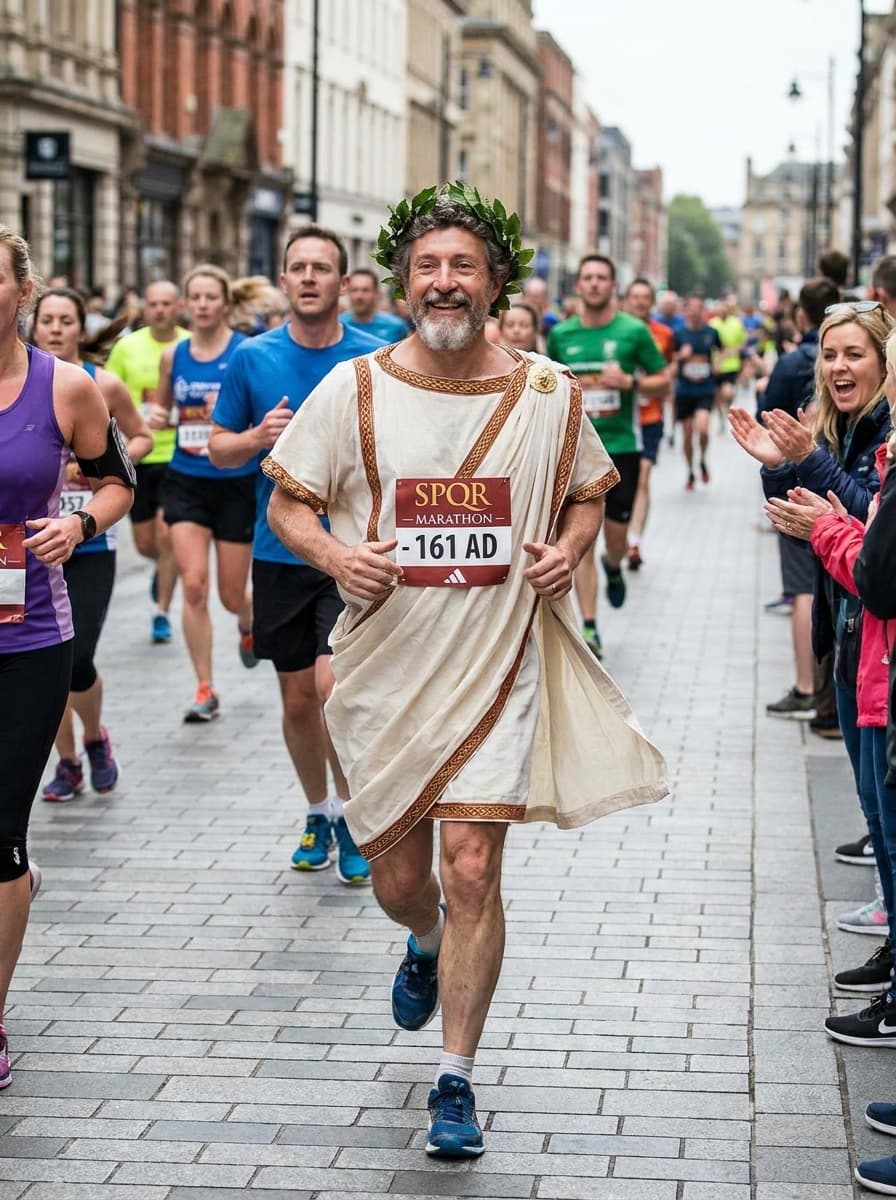
Originating in Athens around 300 BC, Stoic philosophy is grounded in principles of self-control, radical acceptance, and personal character. I got into it some years ago after noticing that the great runners I admired and wished to emulate often embodied these principles.
An example is Eliud Kipchoge, the two-time Olympic marathon champion from Kenya. At the Berlin Marathon in 2015, Kipchoge’s shoes started to come apart after less than six miles, causing painful blisters on both feet and a bloody gash on the left big toe. A lot of runners would have called it quits, but Kipchoge not only finished the race, he won it, offering no complaints at a post-race press conference.
“It is a good shoe, and I have tested that same shoe in training,” he said in reference to his spontaneously disintegrating Nikes. “But that is sport. I have to accept it. I had pain in my foot, but what could I do? I had to finish the race.”
Self-control, radical acceptance, and personal character. Check, check, and check.
I strove to practice these same principles in my own running, and I preached them in books like How Bad Do You Want It? and The Comeback Quotient. Yet it wasn’t until I got sick with long Covid and lost the ability to run that Stoicism became more than just a helpful tool for me but a lifeline, pulling me back from the brink of despair and toward a recovery worthy of its own book.
Here’s a quick timeline:
February 29, 2020 – Caught Covid-19 while running the Atlanta Marathon
At 48, I was as fit as I’d ever been, finishing the race in 14th place out of 2,152 participants.
March 16, 2020 – Broke a rib coughing
I’d never been so sick, but after a month in bed I recovered fully—or so I thought.
October 6, 2020 – Developed long Covid
After six months of apparent good health and productive running, I was hit with a whole new wave of symptoms, including dysautonomia, muscle weakness, shortness of breath, brain fog, and neuropathy. Unlike my prior cough, however, these symptoms did not go away.
January 19, 2021 – Pulled the plug on running
Long Covid has more than 200 documented symptoms, but the most common complaints are chronic fatigue, which makes you not feel like running; exercise intolerance, which makes you feel awful when you do run; and post-exertional malaise, an all-over icky feeling that makes you wish you hadn’t run. I kept running as long as I could, but in the end I just couldn’t.
May 24, 2021 – The worst day of my life
Against my better judgment, I attempted a cautious one-mile test run after fifteen weeks of rest. The result was a terrifying episode of autonomic hyperactivity, a potentially lethal shock state marked by hyperventilation, tachycardia, and hyperthermia. I spent that whole day curled up in bed amid a tangle of sweaty sheets, twitching and wheezing like fresh roadkill. When my wife came to check on me, I told her I wanted to die. It was that bad.
January 1, 2024 – Signed up for an ultramarathon
It made no sense. I hadn’t run in almost three years, and I’d gained almost 40 pounds. Still dealing with daily symptoms, I’d resigned myself to being sick for the rest of my life. But the Stoic in me knew I had to cross one more finish line—and not just any finish line.
Before I got sick, I dropped out of a 100K race just past the halfway point. For closure’s sake, I needed to finish what I’d failed to finish when I was younger, healthier, and fitter, running 100 kilometers and not a centimeter less. I would have preferred to do it without long Covid, but I was prepared to get it done with the disease.
October 25, 2024 – Ran 100 kilometers
I had ten months to get ready for the Javelina Jundred, and I needed all ten of them. My “training” (mostly walking) went better than expected initially, but a major flareup forced me to stop exercising for seven weeks at the height of summer, when I should have been hitting my peak. Adding insult to injury, an autumn heatwave struck the Sonoran Desert on race day, resulting in a new record high temperature of 99°F. We all suffered out there in the blazing Arizona sun, but no one more than me, the guy with dysautonomia, which impairs the body’s ability to thermoregulate. Not once but twice my nervous system went hyperactive on the race course, the second episode so severe that my pacer considered calling for help on the satcom device he’d brought along just in case. Nevertheless, I finished.
A younger me might have won the race, but he could not have done what I did that day with the challenges I faced. What I’d lost in physical strength I’d gained back twofold in mental strength, a trauma-driven midlife personal growth spurt that allowed me to enjoy my proudest moment as a runner long after I’d passed my physical prime. And I had Stoicism to thank for it.
Stoic Running in 3 Steps
I believe that Stoic principles can help any runner get more out of themselves. It isn’t easy, though. Stoicism challenges its adherents to take full responsibility for their thoughts and actions. But if you’re willing to commit to a set of three Stoic “rules” that I imposed on myself while pursuing my race for closure, you will be rewarded. Not only will you perform better, but you’ll also care less about conventional measures of success and find more satisfaction in showing up as the best version of yourself when it counts.
Rule #1 – Don’t waste energy hoping things will go your way.
The key to happiness, according to the Stoics, is breaking free of emotional dependence on outside circumstances, so you’re happy rain or shine. “Don’t seek for everything to happen as you wish it would,” wrote the Stoic philosopher Epictetus, “but rather wish that everything happens as it does happen—then your life will flow well.”
I’m sure lots of runners participating in the Javelina Jundred hoped it wouldn’t be 99 degrees on race day, and what did it get them? A lot of worry beforehand and 99 degrees regardless. Instead I chose to accept the forecast and prepare, spending hours inside a barrel sauna chanting to myself, “Heat gives me strength.”
Runners who waste energy hoping for favorable weather and other blessings that are outside their control have a hard time coping when, inevitably, the weather doesn’t cooperate, or their feet blister, or whatever. Stoics seek their advantage not in better luck but in being better at dealing with bad luck, which is inescapable.
Rule #2 – Focus on controlling the things you can control.
The other side of not worrying about things you can’t control is making the most of what you can, and though we can’t control the weather, the Stoics teach, we can control something far greater, which is what goes on inside our heads. “You have power over your mind—not outside events,” wrote the last great Stoic, Marcus Aurelius, who held a day job as Emperor of Rome between 161 and 180 A.D. “Realize this, and you will find strength.”
With long Covid, the thing you can’t control is your own body. I knew my body would betray me in my race for closure, but I believed I could overcome this difficulty by showing up as as the brave and joyful man that I am in my finest moments, and that I had to be to complete those 100 kilometers.
Over the years I’ve collected a trove of personal mantras to help me through the crisis moments in races. “This is where you want to be.” “It’s never all bad.” “Be here now doing this.” “It’s only pain.” These and other self-reminders of who I wanted to be when things went from bad to worse out there in baking dunes kept me going despite the physical implosion I was experiencing.
Rule #3 – Treat adversity as growth opportunity.
When things go our way, we tend to perform well, which is nice. When they don’t go our way, we grow stronger in the process of battling our misfortune, which for Stoics is even nicer. As Seneca the Younger put it, “Misfortune is virtue’s opportunity.”
No sane person wishes adversity upon themselves, and Stoics don’t either. But they also don’t mind adversity, because they’d rather be strong than lucky. If Eliud Kipchoge seemed indifferent to the comically bad luck that befell him in the 2015 Berlin Marathon, it’s because he was. “I believe in a philosophy that says to win is actually not important,” he told one journalist. “To be successful is not even important.”
When you run stoically, what’s important is not the time on the clock when you finish or how many runners you beat but who you show up as in the race. “You don’t have what it takes,” reads a poster in my office that I made myself. “You find what it takes.” When you finish stronger than you started, you’ve run stoically, and win or lose, there’s no better feeling.
My Challenge to You
I ran my race for closure for myself, but not only. I also ran it to show what’s possible for mortals like us when we emulate the likes of Eliud Kipchoge and Marcus Aurelius. I wanted to prove that even when absolutely nothing goes your way—not even your health—you can run your proudest, most unforgettable race if your best and strongest self shows up. To quote myself again: “Sometimes the worse it is, the better it is.”
Stoic running isn’t for everyone. But then, neither is running.
For the full story of Matt’s inspiring journey through chronic illness as a lifelong runner, check out his acclaimed new book, Dying to Run: An Athlete’s Quest for One More Finish.

About the author
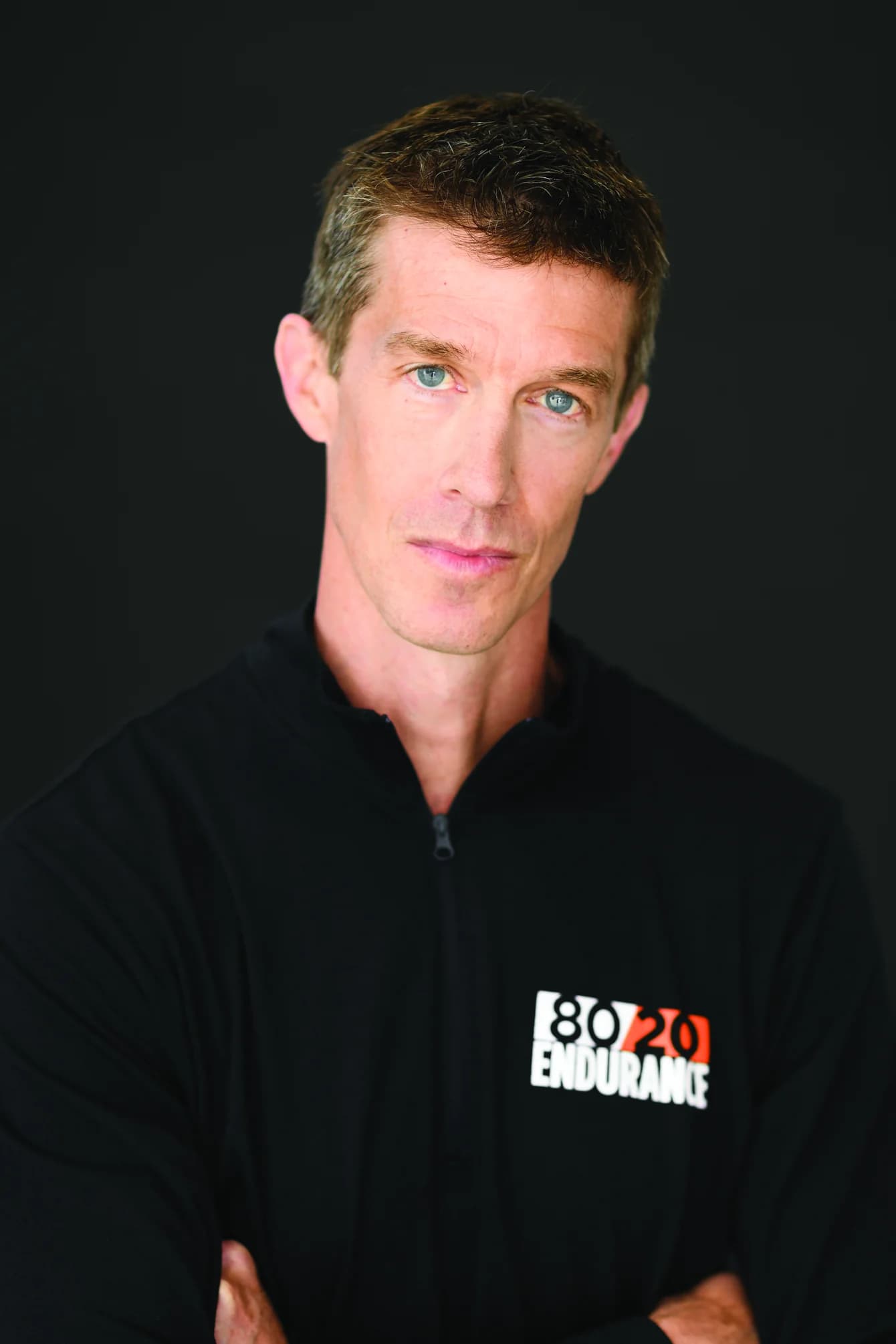
Matt Fitzgerald
Co-founder, 80/20 Endurance
Matt Fitzgerald is an endurance sports coach, nutritionist and the author of 80/20 Running, 80/20 Triathlon, The Endurance Diet and How Bad Do You Want It? His training plans have helped thousands of athletes of every level reach their goals.
More about Matt