Could Your Smartwatch Be Hurting Your Recovery?
By Jim Vance
When athletes think about recovery, they usually think about the big rocks: sleep, nutrition, hydration, rest days, and managing training load.
All of that matters.
But there is another piece of recovery that often gets overlooked: mental strain.
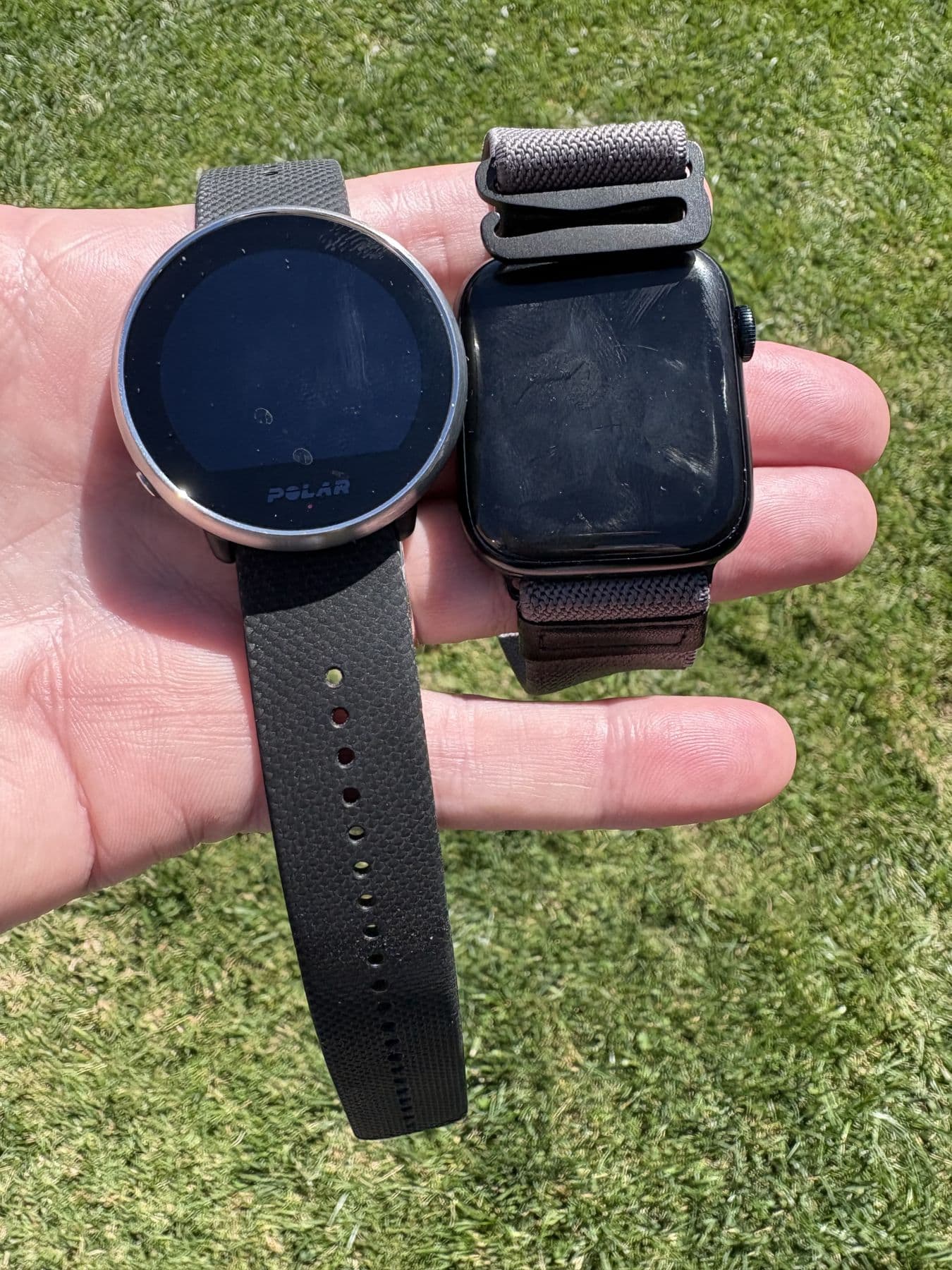
Recently, I stopped wearing a phone-connected smartwatch and went back to a watch that doesn’t connect to my phone. In less than a week, I noticed a remarkable difference. My wrist was no longer buzzing all day with texts, app alerts, and random notifications. I felt less tethered to my phone, less mentally cluttered, and more relaxed.
That experience got me thinking: if constant notifications keep pulling at our attention, what does that do to our ability to recover?
Recovery Is Not Only Physical
Hard training creates physical stress, and the body needs time and resources to absorb it.
But athletes don’t recover in a vacuum.
They recover while managing work, family, logistics, and a steady stream of digital interruptions. Every buzz, vibration, and pop-up asks the brain to shift attention. Even when the interruption seems small, there is still a cognitive cost to reorienting, deciding whether it matters, and returning to what you were doing. This idea frames interruptions as stressors because they create extra mental effort, task switching, and strain.
That matters because recovery is not just about rebuilding muscles. It is also about creating enough calm in your system to actually absorb training.
What the Research Says
A 2023 field experiment published in the Journal of Occupational Health examined the effects of communication-app notifications on strain and performance. The study included 247 participants, with 124 in the experimental group disabling their notifications for one day. The researchers found that reducing notification-caused interruptions was beneficial for performance and reduced strain.
The authors concluded that reducing notifications is recommended, especially for people with low fear of missing out and medium to high telepressure, which refers to the pressure people feel to stay constantly responsive.
That is important because the issue is not just screen time. It is the hidden cost of repeated interruptions.
Why This Matters for Athletes
This study wasn’t conducted on endurance athletes specifically, and it didn’t test smartwatches directly. It focused on communication notifications and their impact on daily strain and performance.
Still, the mechanism is relevant.
If notification-driven interruptions increase strain and reduce performance in everyday tasks, it is reasonable to ask whether athletes are carrying some of that same mental load into recovery. That is especially worth considering during heavier training blocks, when the margin for absorbing stress is already smaller. This is an inference from the study rather than something it tested directly, but it is a practical one.
In other words, an athlete can do everything right on paper, hit the training, eat well, and prioritize sleep, while still carrying more nervous-system load than they realize because they are constantly being pulled back toward their phone.
The Tradeoff of “Always On”
Smartwatches can be great tools. They can make training more convenient, help track useful data, and simplify daily life. But there is a tradeoff when the same device that helps you train also turns your wrist into an extension of your phone.
The problem is not the watch itself. The problem is what comes with constant connection: more interruptions, more urgency, and more low-level strain.
For some athletes, a simple recovery upgrade may not be adding a supplement, changing a workout, or buying a new gadget. It may be removing one source of noise.
A Simple Question Worth Asking
You don’t need to ditch your smartwatch to benefit from this idea, but it may be worth asking: Are the notifications you get on your wrist actually helping you, or are they quietly adding stress you don’t need?
For some athletes, better recovery might look like:
- turning off nonessential notifications
- removing communication apps from the watch
- using focus modes more aggressively
- keeping the watch for training but reducing everything else
- or switching back to a simpler training watch during heavier blocks
Sometimes recovery is not only about what you add, it starts with what you remove.
Final Thought
Athletes spend a lot of time thinking about training load. It may be time to think a little more about attention load too, because recovery needs calm, not just compliance.
And if your wrist is buzzing all day, that might be one more stressor standing between you and your best adaptation. Try it for a couple days, see if you notice a difference. It might be exactly what you need.
Reference
Ohly S, Bastin L. Effects of task interruptions caused by notifications from communication applications on strain and performance. Journal of Occupational Health. 2023;65(1):e12408. Published June 6, 2023.
About the author

Jim Vance
Coach and author, 80/20 Endurance
Jim Vance is an elite endurance sports coach, author and training consultant based in San Diego who coached Olympian Ben Kanute to the American record at Ironman distance and two silver medals at the 70.3 World Championships. He wrote Triathlon 2.0 and Run with Power and co-edited Triathlon Science.
More about Jim