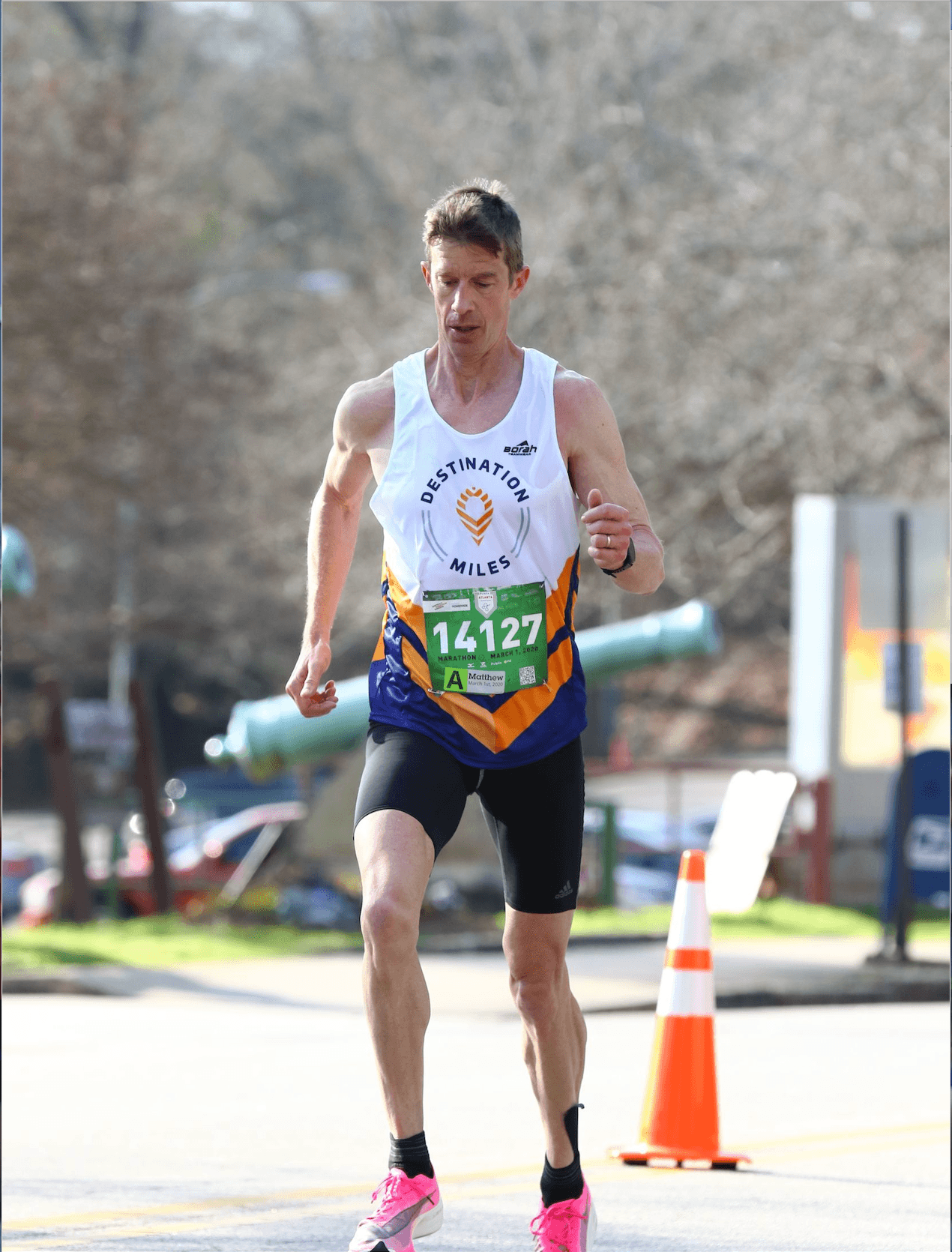
You Decided on Running Your First Ultra, Now What?

So Your Buddy Talked You into Running Your First Ultra, Now What?
The short version. An ultra is any race longer than a marathon, most often 50K, 50 miles, 100K or 100 miles. Start with a 50K or a leg on a team, give yourself about 22 weeks of training on an ultra-specific plan, expect to walk the climbs, practice the aid-station food on your long runs, and learn the cutoff times before the start. The details, from a coach who has run them for ten years, are below.
I can recall the day when a friend of mine asked me if I wanted to run a leg on this team he put together for an ultra. At the time I was working HRFD and thought, sure, how hard can it be? I had never run an ultra before and had no idea what to expect. It was the inaugural Black Spur Ultra 2015, and I was to run leg 1 called the Goat and it was accurately named! While it is 16.1km, it has an elevation gain/loss of 886m (2,906 feet), it was a humbling experience and I could barely walk for a week after the race. I was hooked! I have been running various ultra races for 10 years now and have to say the 54km distance is my favorite!
Before we get into the heart of the post though, be sure to check out our running plans that can help you get ready for running your first ultra.
80/20 Endurance Ultra Running Plans
What does Running Your First Ultra Mean?
The ultra is any distance longer than the full marathon distance of 42km/26.2mi, because this distance wasn’t challenging enough, right?! The common distances you will find in ultras are the 50km, 50mi, 100km, 100mi, and here in Alberta Canada we have a 200mi race distance. Many of the events will have team entries that allow you to assign legs to runners on the team. For example, the first race I ran was 108km with six legs adding up to 108km distance and I was one runner on a team of six. Ultras are not just trail races like my first experience, they can be on a variety of surfaces or terrain and are often called ultramarathons.
The common ultra distances, with the time most first-timers need.
| Distance | In miles and kilometers | Typical first-timer finish |
|---|---|---|
| 50K | 31.1 miles, 50 km | 6 to 9 hours |
| 50 miles | 50 miles, 80.5 km | 10 to 14 hours |
| 100K | 62.1 miles, 100 km | 13 to 18 hours |
| 100 miles | 100 miles, 161 km | 24 to 36 hours |
| Timed events | 6, 12 or 24 hours on a loop | As far as you get |
Trail ultras add climbing, and a hilly 50K can take longer than a flat 50 miler, so read the course profile as closely as the distance.
What to Expect on Race Day when Running Your First Ultra
Do not underestimate the ultra, it will be hard both physically and mentally. The race will have cut off times on each leg and is for your safety, know the cut off times. A lot of races will have a forced start for teams, meaning that if your runner is not in by the cut off they will start the next runner regardless at that time. There will be walking and/or power hiking, not many runners out there can run the entire course and that’s ok! Another mistake (I made it my first time) is not pacing myself and struggling to finish. This is an endurance event, pace yourself accordingly, for example, you may have 12hrs to finish a 54km distance or 24hrs to finish a 108km course. All this information will be on the events website so be sure to know before you go. When asked as a coach what distance to pick my suggestion has been to enter a team and run a leg the first time out. Once you’re hooked like I was, do that for a few years running different legs. Then once you have run all the legs and know what to expect on the course, do the full course. You can also expect at many of the races there will be a kids race, make it a family weekend, my kids have been running these for years now and love it!
How to Train for Your First Ultra
The key takeaway here is actually training once you’ve decided on running your first ultra, don’t do what I did and think your current fitness and what you are doing now will be good enough. Yes I survived the race however I always tell my athletes the goal is to finish a race and say, that was awesome or I crushed it! I would recommend somewhere around 22 weeks to prepare for the race or event, the more preparation you have, the better prepared you will be. If you are going to get a coach, get one that has experience or knowledge of ultra running. If you choose to self coach, be sure it’s an ultra plan, 80/20 Endurance has some excellent training plans for ultras, or have a coach write a specific plan for you. Be sure to include strength and mobility into your training, you will need a strong core running the trails. Nutrition and hydration are often overlooked during training, again, don’t do what I did and just wing it. Find out what they will be offering at the aid stations and practice using it on your long runs to make sure it agrees with you, nothing worse than finding out your GI doesn’t like what you just put in and you’re hanging over a log off the trail. Practice this as often as you can during your training, trust me on this one!
What Gear Do You Need when Running Your First Ultra?
This is really personal preference however there are some basics to consider:
- A running vest with a water bladder that fits the vest (I use this for water only)
- Handheld water bottles (I use these for my electrolytes that fit in the vest pockets)
- Terrain-specific footwear
- Trail running poles (personal preference, if you choose to use them, train with them)
- Headlamp(s) (for running at night)
There is a lot of gear out there however I do suggest you check the race/event website as they will have mandatory and/or suggested gear that you are required to have, many races do gear checks if they have mandatory gear on the trail. Often one of the required pieces of gear is bear spray, if you have never used bear spray before, please learn how to use it.
Is an Ultra Right for You?
If you are looking for a challenge then the ultra is definitely worth a try. Training and preparing for the ultra will take some hard work, most goals do no matter the distance. If the goal is an ultra trail, you will be afforded some amazing views so be sure to stop while you are out there and take some pictures. For me there is something about being out on the trail challenging myself and being in some amazing nature. The ultra world is a fun and amazing running community and sure to forge some lifetime friendships out there.
Are you interested in hearing more from our founder, Matt Fitzgerald? Be sure to check out his latest book Chasing Mastery: 25 Lessons to Cultivate Your Full Potential in Endurance Sports.
Frequently asked questions
How far is an ultra marathon?
Anything beyond 26.2 miles or 42.2 km. The shortest standard ultra is the 50K, the most common long ones are 50 miles, 100K and 100 miles, and some events run on time instead of distance.
Which ultra distance should I start with?
A 50K, or a single leg on a relay team. Both let you learn the course, the cutoffs and the aid stations without committing to a full day on your feet.
How long does it take to train for a first ultra?
About 22 weeks on a plan built for the distance, with most of the running easy and the long runs on terrain like the race. The 80/20 Ultra 50K plan is 18 weeks, the 50 mile and 100K plan 19 weeks and the 100 mile plan 22 weeks.
Do I have to run the whole thing?
No. Nearly everyone walks or power hikes the climbs, and pacing for the cutoffs matters more than running every step. A 54 km race with a 12-hour cutoff is a very different day from a road marathon.
What should I eat during an ultra?
Whatever the aid stations serve, as long as you have practiced it on long runs. Aim for regular carbohydrate from the first hour and keep electrolytes separate from plain water. See how to avoid bonking and GI issues in your next ultra.
What gear is mandatory?
The race website decides. A vest with water, terrain-specific shoes, a headlamp for anything that runs into the night, and often bear spray or a jacket on mountain courses. Train with everything you will carry.
When you are ready, the 80/20 ultra training plans cover 50K to 100 miles at four levels, every one included in Team 80/20. Set your zones first with the 80/20 Zone Calculator.