Understanding Goal Setting for Endurance Sports Athletes

Understanding Goal Setting for Endurance Sports Athletes
The two strongest individual predictors of health, wealth, happiness, and staying out of prison are intelligence and self-regulatory ability. This fact has caused some psychologists to ask whether self-regulatory ability isn’t just a manifestation of intelligence, but recent research has succeeded in demonstrating that the two phenomena are distinct.
Whereas intelligence equates to what is often referred to by laypeople as book smarts, self-regulatory ability is more akin to street smarts.
How Self-Regulation Relates to Your Ability to Select, Pursue, and Achieve Goals
In a paper published in the 2021 Annual Review of Psychology, researchers at the University of Toronto and the University of Illinois described self-regulation as “a broad term that refers to the dynamic process of determining a desired end state (i.e., a goal) and then taking action to move toward it while monitoring progress along the way.” In other words, self-regulation refers to the ability to select, pursue, and achieve goals.
Psychologists who study self-regulation are greatly interested in sports because goals are so central to them and are more clear-cut in nature than they often are in everyday life. It is only a mild oversimplification to say that sports are tests of self-regulatory ability. The better an athlete is at self-regulation, the more that athlete improves, and only expert self-regulators reach the top of any sport.
In a 2021 paper titled “Achievement Goals and Self-Regulation in the Sport Context,” Nico Van Yperen of the University of Groningen identified 10 principles of self-regulation for coaches to adhere to in working with athletes. Next, we’ll take a quick look at each of these 10 Principles as they will give you a good sense of what you need to do to enhance your capacity to self-regulate and understand goal setting for endurance athletes.

Nico Van Yperen Credit: SportsSpeakers
1. How goal setting contributes to self-regulatory success
In the past, scientists who studied self-regulation tended to take goal setting for granted, believing that what distinguished effective self-regulators from less effective self-regulators was instead how they pursued the goals. But lately, psychologists have gained a greater appreciation for how goal setting positions athletes and others for self-regulatory success.
In particular, top athletes tend to fixate on lofty goals as though they were matters of life or death, which makes them less susceptible to the internal conflicts and wavering that often hinder the pursuit of that goal.
2. Types of Goal Setting
There are three basic types of goal setting for endurance sports athletes:
- Outcome goals, where success and failure are measured against external references (e.g., beating or losing to an opponent)
- Performance goals, which measure success and failure against quantitative performance targets derived from assessments of current ability (e.g., setting a personal best time for a particular race distance)
- Process goals, which encode the key things the athlete must do to achieve their outcome and performance goals (e.g., sticking to a target pace during the early part of the race and then adjusting based on how the athlete is feeling).
The important thing to keep in mind is that the underlying goal set in every race is to finish knowing you did the best you possibly could, all things considered. This perspective will help you set outcome, performance, and process goals that make sense and keep each goal type in the proper perspective.
3. Approach goals, avoidance goals, and their subtypes
Yperen makes a further, cross-cutting distinction between approach goals and avoidance goals, each of which may be other-based, self-based, or task-based. The resulting matrix consists of six achievement goal subtypes:
- Other-based approach goals (e.g., beating an opponent)
- Other-based avoidance goals (e.g., not losing to an opponent)
- Self-based approach goals (e.g., doing better than before)
- Self-based avoidance goals (e.g., not doing worse than before)
- Task-based approach goals (e.g., executing correctly)
- Task-based avoidance goals (e.g., not screwing up)
4. Set approach goals rather than avoidance goals
Research has shown that approach goals tend to enhance performance, whereas avoidance goals tend to harm performance, so it’s best to focus on setting approach goals, which stem from desire, rather than avoidance goals, which stem from fear.
Don’t be too rigid in heeding this prescription, however. There may be times when setting avoidance goals (e.g., not quitting) are appropriate and helpful.
5. Focus on self-based and task-based approach goals
In general, Yperen advises, that self-based and task-based achievement goals should be prioritized over other-based goals. Anxiety and lack of self-confidence are common drivers of other-based goals, which open the door for performance-harming “intruding thoughts” during competition.
When I think of other-based goals and their consequences, I think of Squid Game, the television series in which the cost of losing is death. Those who, out of fear, spend too much time checking on other players’ progress succeed only in slowing their own progress and increasing their chances of losing. Run your own race, as they say.
6. Self-regulation and goal setting operates on multiple timescales
Self-regulation operates on various timescales. The first is moment-to-moment, as when athletes keep themselves on track toward a goal within a race.
The second timescale is broader and concerns longer-term self-regulatory processes such as training for a race.
The broadest self-regulatory timescale spans the athlete’s entire athletic career and concerns how they learn to self-regulate more effectively.
Not all athletes learn equally from experience. Those who have a greater knack for self-regulation draw more lessons from their successes and failures and apply them to future challenges. As a result, their self-regulatory ability increases at a higher rate.
7. Work on strengths and weaknesses simultaneously
Athletes with a knack for self-regulation bring a “whatever works” mindset to their athletic endeavors. They are not biased for or against particular means of improving but instead, good self-regulators are willing to adopt any means that does the job.
Hence, whereas many athletes focus on bolstering existing strengths and neglect their weaknesses, skillful self-regulators give equal attention to both.
8. Distinguish between high-pressure situations and athletes’ psychological reactions to pressure
Pressure is intrinsic to endurance racing and goal setting. It arises from:
- Perceived importance of desired outcomes
- Indeterminacy of these outcomes
- The strain of exerting maximum effort
- Need to react and make decisions quickly
Expert self-regulators are not immune from pressure; they just respond to it differently. As Yperen explains, “Performers’ appraisal of their increased arousal level will be determined, among other things, by their perceived abilities to cope effectively with the pressure situation. When they feel they have the requisite physical, technical, tactical, and mental resources, they are likely to interpret their increased arousal level as a functional coping resource that aids rather than harms performance.”
You’ve probably heard the expression, “Pressure is a privilege.”
Expert self-regulators genuinely believe this; other athletes don’t.
9. Accept fluctuating internal states and focus on goal-relevant cues and contingencies
In the pursuit of setting athletic goals, only the goal remains fixed. Everything else—thoughts, emotions, perceptions, sensations—is in flux. Staying on track toward the goal set requires active management of these internal states.
No single tool is capable of corralling every internal state that threatens to derail an athlete’s progress toward their goal. An athlete must have a variety of self-regulatory tools at their disposal and know which one to use in a given situation. For example, there are moments when athletes need to be hard on themselves and there are other moments when they need to be gentle with themselves—a time for the carrot and a time for the stick.
10. Control the controllables
From a distance, expert self-regulators look like control freaks. Up close, however, they do not. The difference is that control freaks try to control (or become anxious over their inability to control) everything, including things that are outside control. Lacking an internal sense of control, they try to make up for it by eliminating all uncertainty from the surrounding environment.
Expert self-regulators, on the other hand, are fanatical about controlling what they can and laissez-faire about what they can’t. For example, while others freak out about an atrocious race-day weather forecast, these expert self-regulated athletes shrug their shoulders and say, “It’s the same for everyone. Let’s move on.”
Goal Setting: Takeaways
I hope this gives you a greater appreciation for how goal setting helps athletes and others set themselves up for self-regulatory success. Don’t shy away from those lofty approach goals, focus on your strengths and weaknesses simultaneously, and control what you can. Don’t sweat the other stuff.
Did you enjoy reading about goal setting for endurance sports athletes? Be sure to check out our other posts on the 80/20 Endurance Blog!
About the author
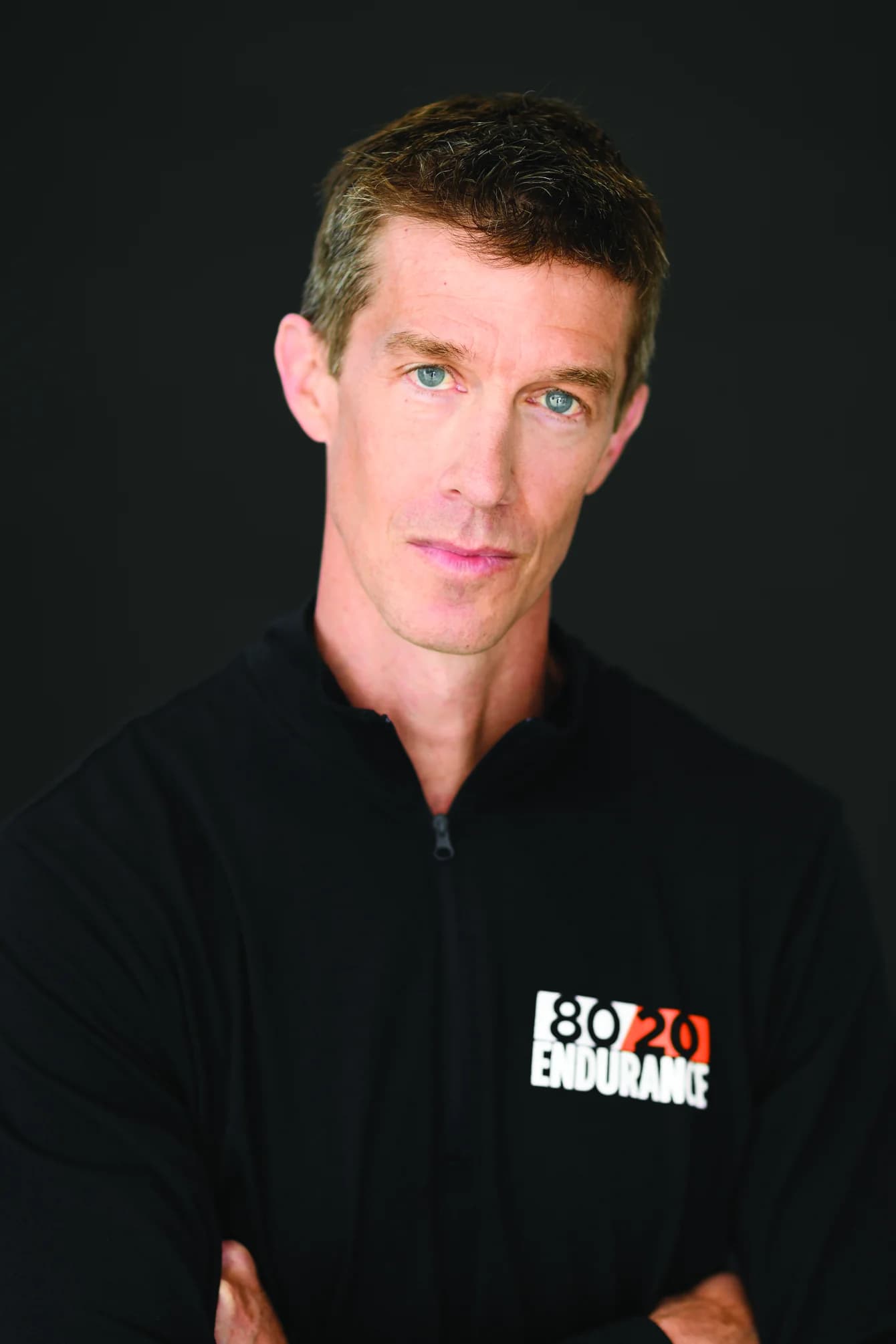
Matt Fitzgerald
Co-founder, 80/20 Endurance
Matt Fitzgerald is an endurance sports coach, nutritionist and the author of 80/20 Running, 80/20 Triathlon, The Endurance Diet and How Bad Do You Want It? His training plans have helped thousands of athletes of every level reach their goals.
More about Matt