How to Be a Better Runner than Jakob Ingebrigtsen
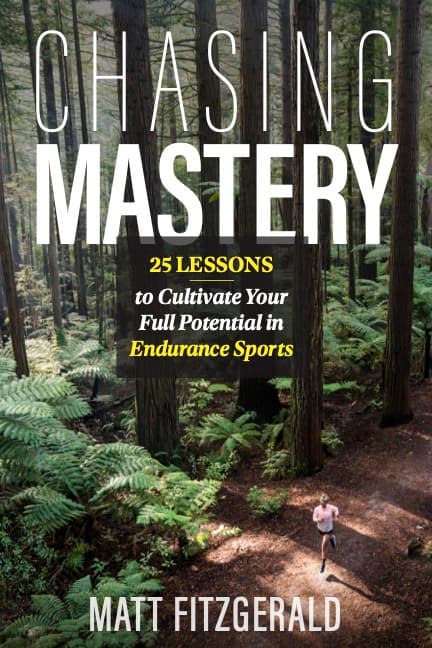
What does it mean to be good at a sport? And what approach can you take when you are thinking about how to be a better runner than Jakob Ingebrigtsen? Most endurance athletes would say it means being fast. Implicit in this definition is the notion that performance is the proper basis for judging of athletic prowess. But in my new book, Chasing Mastery: 25 Lessons to Cultivate Your Full Potential in Endurance Sports, I put forward an alternative perspective on what it means to be good at a sport that is not performance-based.
Imagine two runners, one of whom has a personal-best marathon time of 2:30, the other 3:30. Who is the better runner? Most athletes would say that the faster runner is better because they’re faster. But suppose the faster runner in this example, who is young and talented, has fulfilled 80 percent of their potential in running a 2:30 marathon, while the slower runner, who is older and less talented, has fulfilled 100 percent of their potential in running a 3:30 marathon. In this case, isn’t it the slower runner who’s actually better, having achieved their potential, while the faster runner can continue to improve?
Before I move on, you can also tune in to watch the LIVE Launch of my Chasing Mastery Book on Vimeo from February 2025!
How to Be a Better Runner…maybe this is a matter of perspective?
The problem with judging athletic prowess on the basis of performance is that performance depends largely on things like age and genetics that are outside anyone’s control. To be gifted with great potential is a matter of luck. But when an athlete fulfills the potential they’re given, they deserve all the credit.
The most gifted athletes often fall short of their potential. Only a small fraction of the top-performing youth athletes go on to become the top-performing adult athletes. When athletes are young and inexperienced, talent rules. If 100 kids who’ve never raced a mile race a mile, the winner will almost certainly be the kid with the most natural talent. But as time passes, gifted athletes often don’t improve very much, while other, less-talented athletes improve far more, ultimately surpassing their physically superior peers in performance. If those same 100 kids race another mile when they are no longer kids but adults, the winner will almost certainly be someone other than the kid who won the first race—someone less physically talented but better at developing what talent they have.
Only a small fraction of athletes reach their full potential. Regardless of age or ability, these rare few athletes can be said to have mastered their sport. And while it’s true that talented and young athletes have more incentives to reach their potential, there is in principle no reason you or I or any other everyday athlete can’t become masters of our sport. In other words, there’s no reason you can’t become better a runner by this definition than a world record holder like Jakob Ingebrigtsen.
The word “mastery” connotes control, and rightly so. To master a sport is to gain maximal control over the parts that can be controlled, of which there are three: thoughts, emotions, and actions. An athlete who has reached their full potential is an athlete whose sport-specific thoughts, emotions, and actions help their performance and don’t hinder it. They think, feel, and act in their own interests, making good decisions consistently and with confidence, whereas the vast majority of athletes do not.
Psychologists call this ability self-regulation, which has been defined as “the process of monitoring your own thoughts, feelings, and behaviors; comparing the outcomes against your goals; then deciding whether to maintain your current attitudes and behaviors or to adjust them in order to meet your goals more effectively.” Athletes master a sport by cultivating their ability to self-regulate to the point where they (almost) always know what to do and nothing stands in the way of their doing it.
Come to think of it, Jakob Ingebrigtsen—who at the age of 24 has already accumulated seven Olympic and world championship medals for Norway, four of them gold—is a great example of what mastery-level self-regulation looks like in an athlete. In interviews, Ingebrigtsen expresses a brash self-confidence that is specifically rooted in his belief that he is in total control of his training and racing. “One of the biggest mistakes a lot of people do is they go too hard in training,” he told Citius, “and that’s basically because of their mentality. They don’t believe in themselves.”
On second thought, perhaps you can’t be a better runner than Jakob Ingebrigtsen after all. But you can at least be equally good in the sense that you, too, have reached your full potential by virtue of being in total control of the things you can control. Just don’t except it to happen overnight. In Chasing Mastery I present a five-stage developmental model for sport mastery and walk athletes through the process with 25 targeted lessons. Each stage is defined by what the athlete most needs to continue on their journey toward mastery:
- Athletes who are just beginning need motivation above all, for with motivation comes the oomph required to stretch toward personal greatness.
- Once an athlete has the motivation to begin the journey, learning becomes primary, lining out the tools required to make smart use of their motivation.
- Then comes understanding, which enables athletes to always choose the right tool for the occasion.
- Stage four is all about individuation, where athletes discover ways to refine and personalize their toolset.
- Finally, there’s the challenge stage, where the need to stay needy—that is, to never be satisfied— becomes paramount.
Where are you in this process, and where would you like to be?
I wrote Chasing Mastery to satisfy what I perceived as a glaring need for a definitive guide on how to reach one’s full potential as an endurance athlete. You can search high and low, and you will not find any preexisting resource that directly addresses the questions of what it means to reach one’s full potential in endurance sports and tells you how it’s done. In my completely unbiased opinion, my new book essential reading for any athlete who wants to find out how good they can be.
You can also watch the LIVE Launch of my Chasing Mastery Book from February 2025!
About the author
Matt Fitzgerald
Co-founder, 80/20 Endurance
Matt Fitzgerald is an endurance sports coach, nutritionist and the author of 80/20 Running, 80/20 Triathlon, The Endurance Diet and How Bad Do You Want It? His training plans have helped thousands of athletes of every level reach their goals.
More about Matt