Norway Sweeps the Men’s Podium at the 2025 Ironman World Championship
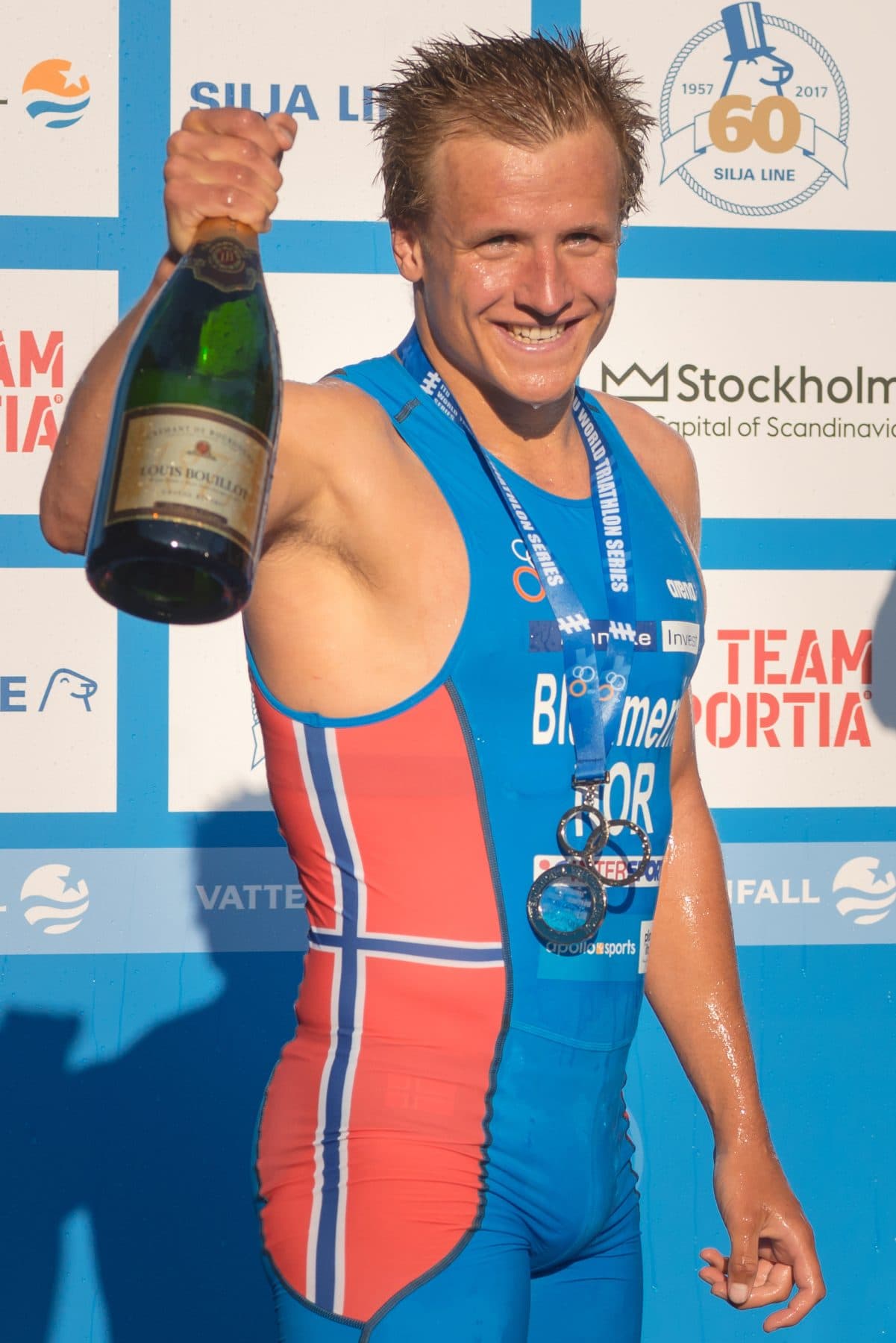
The Norwegian Wave appears to be here to stay. Are you riding it?
Imagine what would happen if three men from Wisconsin finished first, second, and third at the Ironman World Championship. A massive hoopla would erupt in the mainstream and social media. The memes would practically write themselves—“It must be the cheese!” . . . and do on.
Wisconsin has a population of 5.96 million people, and no athlete from the Badger State has ever made the podium at the Ironman World Championship. But last weekend the tiny nation of Norway, with just 5.57 million citizens, placed three athletes on the men’s podium at the Ironman World Championship in Nice, France, with debutante Casper Stornes winning in 7:51:36, Gustave Iden (who won the same title in 2022) taking second in 7:54:13, and another past winner, Kristian Blummenfelt (2021), rounding out the podium in 7:56:34.
I’m good friends with a statistician who assures me the odds of this happening by pure chance are close to zero. Which means there has to be a reason that Norway is currently so dominant in triathlon—and not just triathlon but also other endurance sports, including running (Norway’s Jakob Ingebrigtsen has won nine global championship medal since 2021) and winter sports (Norwegian athletes won a whopping 24 medals in cross-country skiing, biathlon, and speed skating at the 2022 Winter Olympics).
Casual fans might look at Norway’s dominance in endurance sports and say, “Gee, that’s neat. What’s for dinner?” But fans who are also athletes want to know the secret to Norway’s success so they can emulate it in pursuit of their own goals. If I put this question to the average triathlete on the street, they would probably say the secret is double threshold training (i.e., completing two lactate threshold-intensity interval workouts on the same day) and heavy reliance on blood lactate testing during workouts—a pair of practices that has come to be known as “the Norwegian Method.”
The problem with this answer is that, although Norway popularized these practices, they are indeed quite popular now, so they no longer give Norwegian athletes a special advantage. Each Thursday I interview a professional runner for the “Dream Run Live” podcast, and I always ask my guest if they do double threshold workouts, and they all answer yes. I’m not suggesting there’s nothing special about double threshold workouts or lactate testing—there is, which is precisely why everyone is doing these things. But if you want to understand why Norway remains dominant despite the fact that everyone at the elite level is doing double threshold workouts and incorporating lactate testing into their training, it helps to know why Norway, and not some other country, came up with the Norwegian Method in the first place, and that’s what veteran triathlon writer Brad Culp does in his terrific book, The Norwegian Method: The Culture, Science & Humans Behind the Groundbreaking Approach to Elite Endurance Performance.
As the subtitle indicates, Culp emphasizes environmental and contextual factors in explaining recent (and past) Norwegian success in endurance sports. And he’s right to do so. Group dominance in sport is the norm, not the exception. Australia almost always finishes among the top three countries in the Olympic medal count in swimming. The Netherlands—one of the smallest countries on earth territorially—had 28 riders in this year’s Tour de France, more than any other country. Twelve of the top 50 women golfers in the world are Korean. And on it goes.
In The Norwegian Method readers learn about the roots of Norway’s endurance sports culture in the Viking period, the uniquely tight relationship between the country’s top exercise scientists, coaches, and athletes, how yesterday’s athletes pay forward their success by supporting today’s athletes, and other factors create an environment in which the production of generational superstars is inevitable. The Norwegian Method is not double threshold workouts and blood lactate testing—it’s a culture that ensures its top endurance athletes are always one step ahead of the competition.
And if you’re a hedgehog-minded reductionist who cares only about methods, there’s plenty about these, too, in The Norwegian Method. And speaking of methods, I am currently working on a collection of Norwegian Training plans for 80/20 Endurance that will be available soon at norwegiantraining.com. Look for the run plans in early November and the triathlon plans in the New Year. Skol!
About the author
Matt Fitzgerald
Co-founder, 80/20 Endurance
Matt Fitzgerald is an endurance sports coach, nutritionist and the author of 80/20 Running, 80/20 Triathlon, The Endurance Diet and How Bad Do You Want It? His training plans have helped thousands of athletes of every level reach their goals.
More about Matt