Race-Day Nerves Are Costing You More Than You Think (Science Says So)
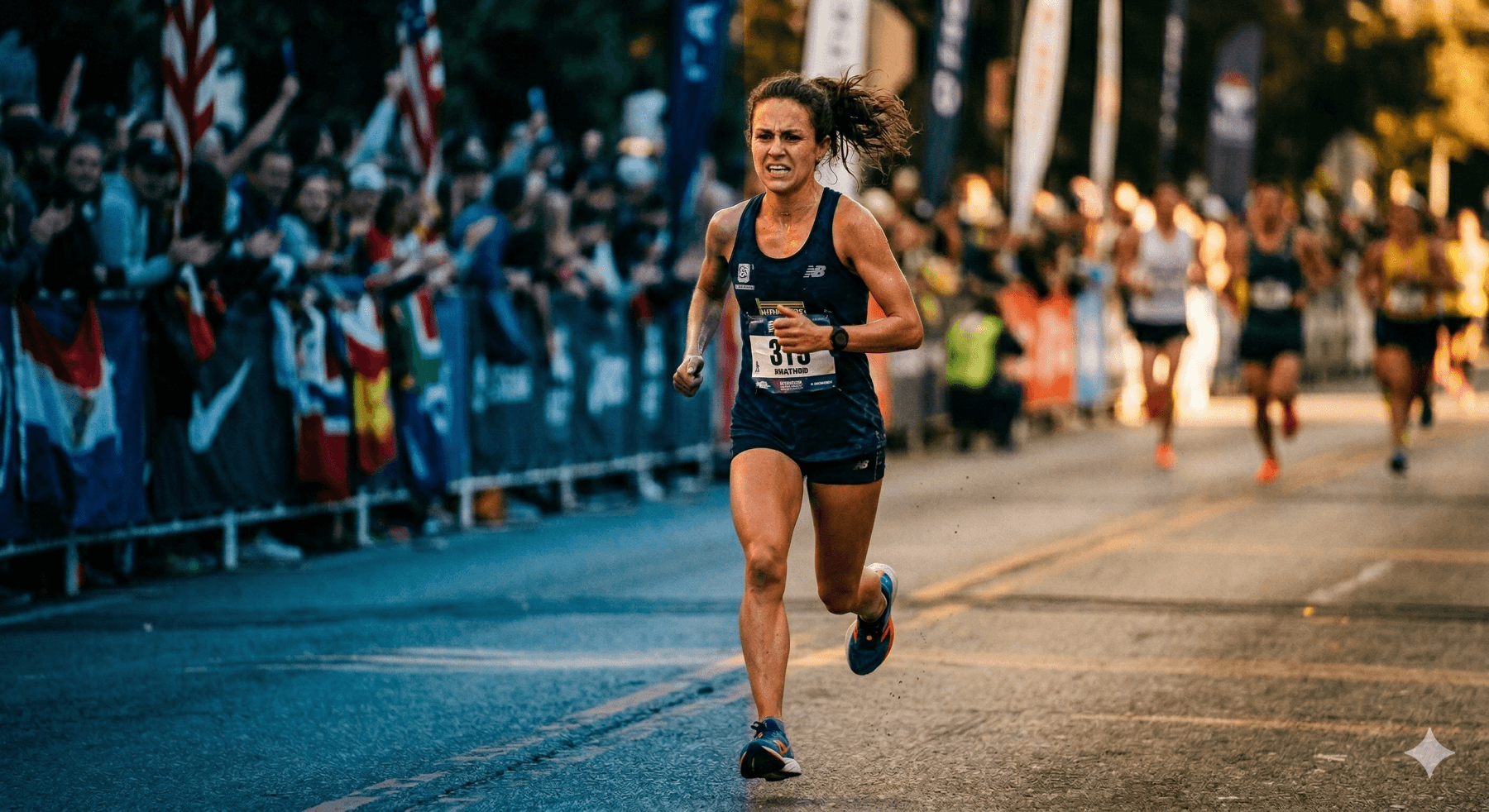
You’ve heard it before. “Just toughen up. Everyone gets nervous. Push through it.”
Good advice — if you want to keep underperforming at the starting line, blow your pacing in the first mile, and make terrible decisions in the back half of a race you trained months for.
The truth is, race anxiety isn’t a character flaw or a mental weakness. It’s a physiological event. And a 2021 study published in the Pakistan Journal of Humanities and Social Sciences puts hard data behind what endurance coaches have long observed: anxiety doesn’t just make you feel bad before a race — it actively degrades your performance while it’s happening.
Here’s what that actually means for you.
What the Research Found
In their study “Impact of Sports Anxiety on Sports Performance of Players,” Bukhari and colleagues examined the relationship between pre-competition anxiety and athletic output across sport categories. Their findings were clear: elevated anxiety — both cognitive (what you’re thinking) and somatic (what your body is doing) — is directly associated with reduced athletic performance.
Not correlated. Not sometimes linked. Directly associated.
Two mechanisms are at work simultaneously:
Cognitive anxiety floods your brain with self-doubt, worst-case scenarios, and attentional distractions. Instead of executing the race plan you’ve rehearsed, your mind is running a parallel simulation of everything that could go wrong.
Somatic anxiety is the physical expression of that same stress response — elevated heart rate before the gun, muscle tension that burns energy you need for the race itself, GI distress that has nothing to do with your nutrition plan, and disrupted breathing patterns that compromise your aerobic efficiency before the race even starts.
The brutal irony: the harder you’ve trained, the more you care — and the more you care, the more anxiety you’re likely to carry into race day.
What This Looks Like in an Endurance Race
You’ve experienced this. Maybe you didn’t have a name for it.
The start corral: Your heart rate is already 20 beats above where it should be, you’re breathing shallow, and you’ve burned through nervous energy that was supposed to carry you through the first hour of racing.
The first mile or first climb: You go out too hard because anxiety overrides your pacing plan. You tell yourself you’ll settle in. You don’t. The damage is already done.
Mile 18 of the marathon — or the final 10 miles of a century ride: The decision-making window narrows. Do you push? Back off? The mental clarity required to read your body accurately is compromised by hours of anxiety-fueled cortisol coursing through your system.
When a competitor makes a move: The gap opens. The moment to respond is now. But the anxious athlete hesitates — overthinks — and the gap becomes a gulf.
This is anxiety as a performance tax. And most athletes pay it without realizing there’s another option.
The Good News: This Is Trainable
Anxiety management isn’t about eliminating nerves. Some activation is useful — it sharpens focus and primes the body for effort. The goal is calibration: keeping arousal in the performance zone instead of the red zone.
That requires skills. Actual, learnable, practicable mental skills — the same way zone 2 fitness is built through consistent, intentional work.
Questions? Reach our coaching team anytime at results@8020endurance.com
References
About the author

Jim Vance
Coach and author, 80/20 Endurance
Jim Vance is an elite endurance sports coach, author and training consultant based in San Diego who coached Olympian Ben Kanute to the American record at Ironman distance and two silver medals at the 70.3 World Championships. He wrote Triathlon 2.0 and Run with Power and co-edited Triathlon Science.
More about Jim