Hydration Packs for Running, Vest or Backpack and How Much Water to Carry

The short version. A hydration pack for running is worth carrying on fewer runs than the gear shops suggest. Most runners do not need one for runs under 90 minutes in mild weather, or for a road marathon with aid stations. You need one when you will be out longer than that without water, when it is hot, when you are on trails, or when you have to carry gels, a phone and a layer as well as a drink. For most of those runs a vest with two soft flasks in the front is the better choice. A backpack with a bladder makes sense for long, self-supported days when volume matters more than easy refills. Carry what you will drink in the gap between refills, which for most runners in most weather is 400 to 800 ml an hour, and buy the size that holds that plus your gear without bouncing.
Do you need a hydration pack for running at all?
Start with the run, not the gear. A 60 minute easy run in spring weather does not need carried water. A long run of two hours on a loop that passes a fountain does not either. Where a pack earns its place is a long run with no water on the route, a hot day, a trail run where the loop is three hours and the only water is a creek, and any race that calls itself an ultra. The first ultra guide lists a vest with a bladder and handheld bottles as the basic kit for exactly that reason. The other case is the runner who simply wants to carry a phone, keys, a gel and a windbreaker without stuffing them in shorts, and a small vest does that job even with the flasks left at home.
If you only need a little water, a handheld bottle or a belt with one 500 ml bottle is lighter and cheaper than any pack, and it is what most of our athletes use for road long runs up to about two hours. The pack question starts when one bottle is not enough.
Vest or backpack
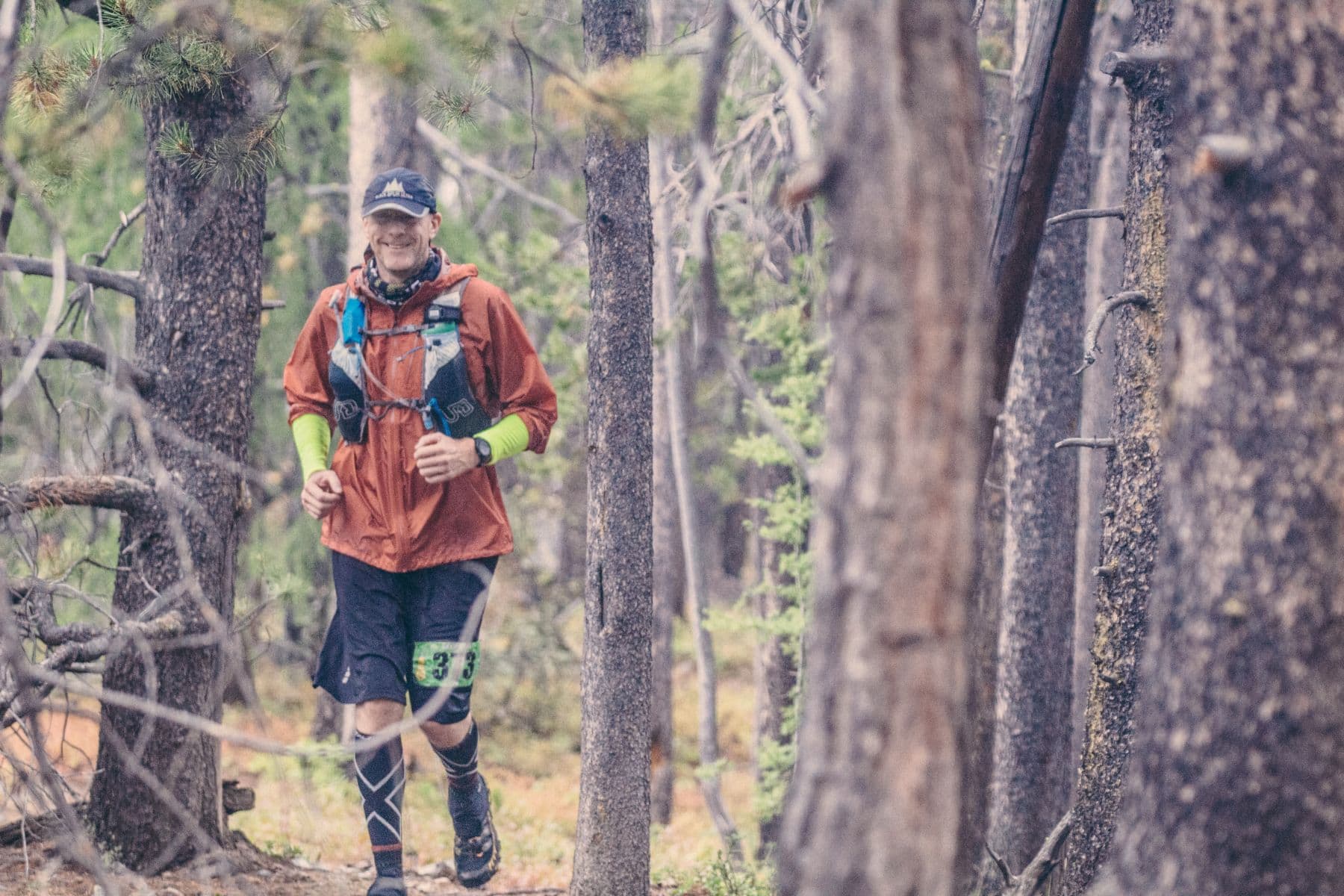
There are two designs. A running vest sits close to the chest and carries its water in two soft flasks in front pockets, usually 500 ml each, with a stretch compartment on the back for a layer and sometimes a sleeve for a bladder. A hydration backpack carries a bladder of 1.5 to 3 litres on the back with a hose over the shoulder. The vest is what you will see on nearly every trail start line now, and there are reasons for that.
- Flasks are easy to refill. At an aid station you pull them out, fill them and go. A bladder has to come out of the pack, and the pack usually has to come off you.
- You can see how much is left. A bladder on your back is a guess until it runs dry.
- Flasks let you carry two different drinks, water in one and an electrolyte or carbohydrate mix in the other, which matters once a run is long enough to need calories as well as fluid.
- A vest carries less weight and holds it closer to your centre of mass, so it bounces less.
The backpack wins on volume and on hands-free drinking. For a long day in the mountains with no refills, or a runner who cannot stand the feel of full flasks on the chest on rocky descents, a 2 litre bladder is the right tool. One of our athletes put it well on the forum after a 50K. He preferred the backpack for training and took the vest to the race, because refills were faster and carrying 1 litre instead of 2 saved energy over a long day. That is the trade in one sentence.
How much water to carry
For anything under two hours, drink to thirst and carry what that takes, which for most people is one flask. For long and hot runs, plan on 400 to 800 ml an hour and find out where you sit in that range with a sweat test. Weigh yourself before and after a one hour run without drinking, in the conditions you are training for. Each kilogram lost is a litre of sweat, and your target is to replace enough of it that you do not finish more than about 2 percent down, not to replace all of it. Then multiply the hourly figure by the longest gap between refills on your route, and that is the capacity you need. Two flasks covers most runs. Two flasks and a 1.5 litre bladder covers almost everything else.
Carry calories with the water once a run goes past about 90 minutes. The carbohydrate drip explains how we pace fuel across a long effort, and this piece on bonking and GI trouble is the case for practicing it in training rather than discovering on race day that your stomach disagrees. A pack with front pockets for gels is worth more than an extra litre of water for most runners.
Picking a size that fits and does not bounce
Vests are sized by chest measurement, not by shirt size, and the women’s cuts are different enough in the chest and shoulder to be worth seeking out. Measure, check the maker’s chart, and if you are between sizes take the smaller one, because a vest that bounces is a vest you will leave at home. Try it loaded. An empty vest fits everyone. Put two full flasks and a jacket in it and jog on the spot, and if it moves, tighten the side straps or try the next size down.
On capacity, 5 litres is enough for runs up to about three hours in most weather. 8 to 12 litres is for mountain days, mandatory gear lists and winter. Anything larger is a hiking pack. Beyond size, the details that decide whether you like it are the ones you use every run. Front pockets you can reach without stopping. A phone pocket that fits your phone with its case on. Somewhere to stow poles if you use them. A bladder sleeve if you might want one later. The brands our athletes most often turn up in are Salomon, Nathan, Ultimate Direction and Osprey, with CamelBak on the backpack side, and the differences between their mid-range vests are smaller than the difference between a vest that fits you and one that does not.
Train with it before you race with it
Whatever you choose, it goes on every long run from then on, loaded the way it will be on race day. Drinking from a flask at Zone 2 pace without breaking stride takes a few runs to learn, and so does refilling one at a table while someone else waits. Our ultra plans schedule long runs that are long enough to need it, and the trail runner’s guide to staying easy covers the other habit that a pack tends to disturb, which is keeping the easy days easy when the terrain and the gear both push you harder. Every 80/20 plan with a long run long enough to need a pack is built that way, easy days easy and the long run practiced in full, and Team 80/20 includes them all.
Rinse flasks and bladders after every run and dry them open. A bladder that stays damp grows things, and a hose that has grown things is unpleasant to find out about at mile 20.
Frequently asked questions
Is a vest or a backpack better for running?
A vest for almost every run and race, because the flasks are easier to refill, you can see how much is left, it carries less weight and bounces less. A backpack with a bladder for long self-supported days where volume matters more than refills.
How much water should I carry on a long run?
Enough to drink 400 to 800 ml an hour between refills, with a sweat test telling you where in that range you sit. Two 500 ml flasks covers most long runs. For anything under two hours in mild weather, one flask or a handheld and drink to thirst.
Do I need a hydration pack for a marathon?
Not for a road marathon with aid stations every couple of miles. A handheld for the first few miles, if the early tables are crowded, is as much as most runners need. Our marathon plans assume you drink at the aid stations and practice it in training.
How do I stop a hydration pack from bouncing?
Size it by chest measurement, go smaller if you are between sizes, load it the way you will run with it, and tighten the side and sternum straps until it moves with you rather than after you. If it still bounces, the pack is too big or the weight is too far from your back.
What size hydration pack for trail running?
5 litres for runs up to about three hours. 8 to 12 litres for mountain days, mandatory gear and winter layers. Capacity above that is a hiking pack and will feel like one.
How do I clean a hydration bladder?
Rinse it with warm water after every use, a drop of dish soap or a cleaning tablet once a week, and dry it open, with the hose off and hung straight. Store it in the freezer between runs if you cannot get it dry.
About the author

Jim Vance
Coach and author, 80/20 Endurance
Jim Vance is an elite endurance sports coach, author and training consultant based in San Diego who coached Olympian Ben Kanute to the American record at Ironman distance and two silver medals at the 70.3 World Championships. He wrote Triathlon 2.0 and Run with Power and co-edited Triathlon Science.
More about Jim